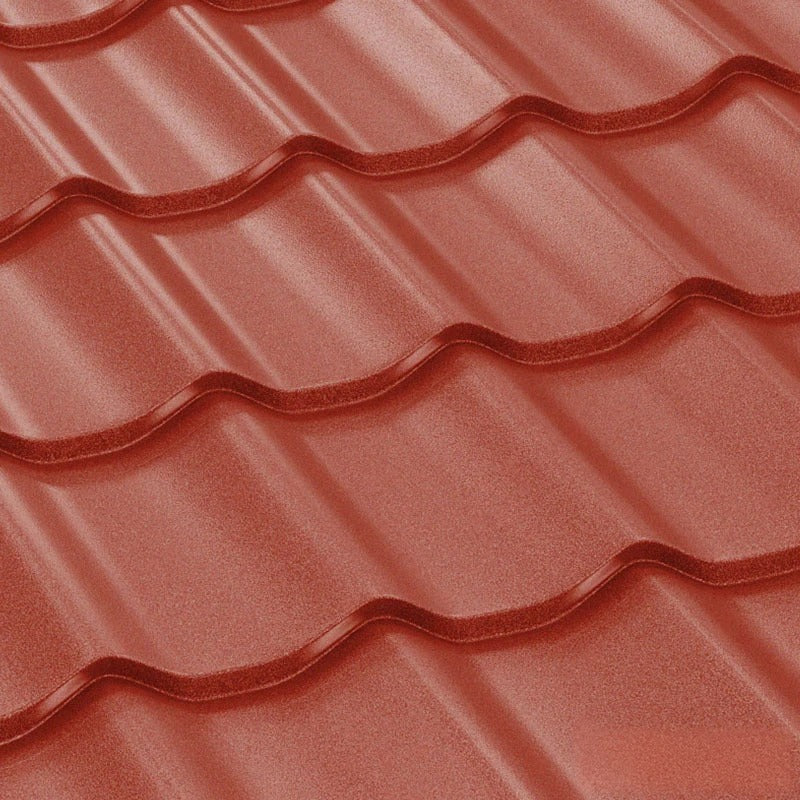

Bitumen tiles hold firmly in strong wind when the small details are precise.
Shingles during a storm do not forgive lazy installation and left gaps.
Here you will see what really helps: proper nailing, smart gluing, and tight ridge elements.
We will also cover risky spots like eaves, chimneys, and valleys.
At the end, there are quick answers to the questions people ask out loud.
In short
- Nails are more important than "strong glue."
- The underlayment holds when the wind gets under the tiles.
- The ridge cap is the first to "flip" if not fixed.
- The claddings and gutters stop suction along the edges.
Why does the wind lift the soft tiles
Gusts cause suction along the edges.
If there is an open corner, the wind finds a way under the first row.
Then it works like a zipper and starts to "peel" upwards.
Where it most often happens with shingles
The most at risk are the eaves, the ridge, and the area around the chimney.
Valleys where water and dust collect are also problematic.
There, the adhesive ages faster, especially with sudden temperature changes.
What to check before buying
Ask about the roof slope and the wind zone.
Check if the base is flat and dry.
On the other hand, saving on the underlay often turns out expensive.
If you are looking for specific options, check out Bituminous Shingles.
Nailing shingles without compromise
Nailing holds the covering when the adhesive is cold.
And when the dust has reduced adhesion during the summer.
It is not complicated work, but it requires precision.
How many nails and where they are placed
Most systems work with four to six nails per element.
The exact number depends on the model and the slope.
In windy places, the upper edge is used.
The nail must go in straight and lie flat.
A crooked nail tears the bitumen and creates an air pocket.
What fasteners are suitable
Look for galvanized roofing nails with a wide head.
This way the pressure is distributed and does not cut the covering.
For accessories and fasteners see Fasteners.
Mistakes that cost later
- Nails too high, outside the pressure zone.
- Nails too close to the edge and the material splits.
- Nailing too hard and the head sinks.
- Skipping edge rows around the eaves.
If you need a tool that won't let you down, check out Tools.
Bonding and self-adhesion in strong wind
The bonding works, but only on a clean base.
In cold weather, self-adhesion activates more slowly.
Then don't rely only on the sun.
When to add bituminous mastic
At edge zones, around the ridge, and at details.
It is applied spotwise, not in a thick line.
Excessive glue collects dust and then pulls the granulate.
Underlay and membranes
The underlay is the "second skin" of the roof.
If the wind drives rain under the tiles, it stops the leak.
For waterproofing see SBS waterproofing and ARR waterproofing.
When looking for voalit for flat areas, check Voalit.
Ridge elements and caps without "flipping"
The ridge is like a flag on the roof.
The wind hits it first and strongest.
That is why ridge elements require double discipline.
How to make a ridge row with soft tiles
Ridge pieces are cut or ready-made elements are used.
They are placed against the prevailing wind.
Each element overlaps evenly.
The nails are placed under the next overlap.
Ridge ventilation
Without ventilation, moisture remains in the attic space.
Then the wood moves and the fasteners loosen.
For wooden bases and rafters see Wood material and Beams.
Eaves, claddings, and gutters during strong gusts
The eaves are the place where the wind "catches" the roof.
There, proper cladding and a stable downspout line help.
Eaves cladding and under-gutter skirt
The metal cladding protects the edge and directs the water.
A well-made under-gutter skirt stops leaks along the boards.
Check out Eaves Claddings.
Gutters that don't rattle in the wind
A poorly fixed gutter rattles and loosens the brackets.
Then the water runs down the facade and causes stains.
See Seamless Gutters and Classic Downspout System.
Chimney, valleys, and transitions to sheet metal
Around the chimney, the wind causes swirling.
There, a tight cladding and clean water drainage are sought.
You don't need a complicated scheme, but proper overlaps.
Valleys and finishing sheet metals
The valley collects a lot of water at once.
Therefore, the underlay there must be continuous.
Where there is a transition to metal, the same rule applies.
For sheet metal solutions, check out Roof Sheet Metal and Profiled Sheet Metal.
When to consider metal tiles
With a very complex roof, metal is sometimes easier.
And when you need fast installation on large areas.
Browse Metal Tiles and accessories in Accessories for Metal Tiles.
Insulation and panels when you want silence
The wind is not only a risk, it is also noise.
Good thermal insulation reduces vibrations and condensation.
Check Thermal Insulation.
Thermopanels and sandwich panels for roofs
Thermopanels are often sought for canopies and halls.
They are fast and provide a straight line.
For selection see Thermopanels.
Price and choice of roof with shingles
When you ask about bitumen tile price, look at the whole system.
One bitumen tile can be cheap, but the installation can become expensive.
The reason lies in the underlay, the fasteners, and the ridge details.
What is included in the actual offer
- Underlay and waterproofing in risk areas.
- Roofing nails, mastic, and self-adhesive tape for roofs.
- Claddings, roof gutters, and finishing sheets.
- Ventilation and wooden base without warping.
If you compare tile prices over the phone, leave room for details.
In stormy areas, Bitumen shingles in strong wind require more fixations.
And that is normal, it is not "overpricing."
If you compare metal shingles price, also consider the noise from rain.
With roofing metal sheets, vibrations are more noticeable without insulation.
With thermal panels, the balance is different, but the details are important.
Question? How much does a roof with bitumen shingles cost per square meter? Answer. The price depends on the layer, slope, and complexity.
Order, delivery, and on-site assistance
When planning a roof, the hardest part is to gather everything on time.
And to deliver it without crushed edges and wet packages.
LATIVA offers specialized transport in Sofia and throughout Bulgaria.
There is delivery to the site directly from the factory for larger orders.
There is also delivery with a transport company, regardless of quantity.
For small things, courier with Econt or Speedy is possible.
See the terms in Delivery Information and ask if anything is unclear.
If you want guidance for the choice, there is a free consultation.
For inquiries open Contact.
If you prefer installation, there is an option for professional execution.
See Roof Repair.
Short questions and clear answers
How are bitumen shingles nailed down in strong wind? With more fasteners and an exact line of nails.
How many nails are needed for one bitumen shingle? Usually four to six, depending on the system.
Should I glue the shingles additionally? Yes, but only in edge zones and details.
What is most important in ridge elements? Overlap direction and a hidden nail under the next row.
When should I look for roof repair? When there are raised edges, missing granules, and leaks.
Quick checklist before wind
- Check the ridge and the edge rows.
- Check the eaves cladding and around the chimney.
- Tighten the gutter clamps.
- Make sure there are no peeled corners.
Final steps and peace of mind
A well-made roof is not a matter of luck.
It is a collection of small decisions made on time.
If you are just choosing roofing materials, do not mix systems by eye.
Use clear instructions and follow the installation order.
For guidance, look at Installation Instructions and How to Install.
If you want a quick answer to common issues, see Frequently Asked Questions and Warranties.
Press towards the choice now, then the bad weather comes.
Order materials, add fasteners, and finish the details.
And if you hesitate, write through Contact.
Bitumen shingles remain stable in strong wind when the roof is made properly.